


资本化率(Capitalization Rate,简称 Cap Rate) 是房地产投资中常用的一个衡量指标,用于评估一项物业的潜在收益率。它表示物业在没有贷款情况下,每年可带来的净营运收入(NOI)与物业市场价值之间的比率,反映投资的回报水平和风险程度。

One of the challenges with evaluating commercial real estate deals is that no two properties are exactly alike. Even two otherwise identical multifamily apartment buildings, constructed at the same time by the same sponsor. Often will have slightly different locations, tenants and more. It can be hard to make a true “apples to apples” comparison among properties as a result.
评估商业房地产交易的挑战之一是没有两个房产是完全相同的。即使是两栋原本相同的多户公寓楼,由同一个赞助商同时建造。通常会有略有不同的位置、租户等。因此,很难在属性之间进行真正的 “同类 ”比较。
Instead, investors will often turn to metrics like “cap rate” for guidance. Using financial data, analytical tools such as cap rate aim to objectively compare properties.
相反,投资者通常会转向“资本化率”等指标作为指导。使用财务数据,Cap Rate 等分析工具旨在客观地比较房产。
What is a Cap Rate?
什么是上限率?
A property’s “cap rate” refers to its capitalization rate. It is one of the most common metrics investors use when analyzing individual deals and their potential profitability. It looks at the ratio between net operating income and purchase price, as further explained below. Analysts express cap rates as a percentage, which typically falls between 3% and 12% or higher.
住宿的“上限率”是指其资本化率。它是投资者在分析单笔交易及其潜在盈利能力时使用的最常见指标之一。它着眼于净营业收入与收购价格之间的比率,如下所述。分析师以百分比表示上限率,通常在 3% 到 12% 之间或更高。
Cap rates tend to have an inverse relationship to value.
上限率往往与价值成反比。
The more valuable a property,
房产越有价值,
the lower the cap rate and vice versa.
CAP 率越低,反之亦然。
As such, investors can expect to pay more for properties with a low cap rate. In comparison to those with a higher one.
因此,投资者可以预期为低上限率的房产支付更多费用。与那些更高的相比。
Cap rates are often correlated with a property’s risk profile, as well. “Riskier” properties, such as those in need of substantial renovation or stabilization, tend to have higher cap rates than newer, more fully stabilized properties. However, higher risk often comes with the potential for greater rewards. Which is again where we see cap rates and potential returns being correlated.
上限率通常也与物业的风险状况相关。“风险较高”的房产,例如需要大量翻新或稳定的房产,往往比较新、更完全稳定的房产具有更高的上限率。然而,更高的风险往往伴随着更大的回报。这也是我们看到 Caprate 和潜在回报相互关联的地方。
How to Calculate the Cap Rate
如何计算上限率
The cap rate is simply the ratio between net operating income and purchase price. The calculation is simple:
资本化率就是净营业收入与收购价格之间的比率。计算很简单:
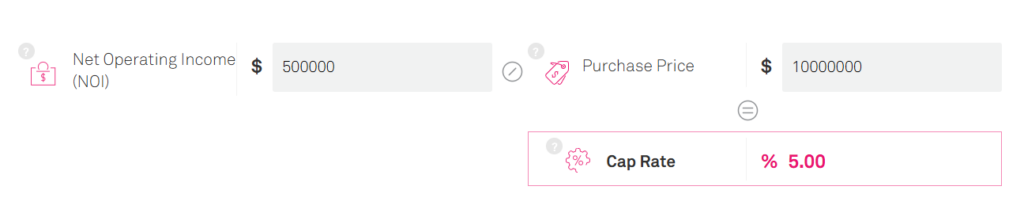
Therefore, a property with $500,000 per year in NOI that is purchased for $10 million will be said to have a 5% cap rate ( = $500,000 / $10 million).
因此,每年 NOI 为 500,000 美元但以 1000 万美元购买的房产将被称为具有 5% 的上限率(= 500,000 美元 / 1000 万美元)。
Because the cap rate is a ratio of the income to price, it is important to understand what income entails.
因为上限率是收入与价格的比率,所以了解收入意味着什么很重要。
Net Operating Income (NOI)
净营业收入 (NOI)
To find the NOI, you must first start with the gross rental income. This includes all tenant payments as well as any ancillary income. For example parking fees, laundry fees, storage fees, event or room rental fees, and more.
要找到 NOI,您必须首先从总租金收入开始。这包括所有租户付款以及任何辅助收入。例如停车费、洗衣费、仓储费、活动或房间租赁费等等。
Then, deduct any vacancy or credit losses, property taxes, property insurance, maintenance and repairs, utilities (if any), and other miscellaneous costs such as management fees. After deducting these expenses, the remaining income is called the net operating income or NOI.
然后,扣除任何空置或信用损失、财产税、财产保险、维护和维修、水电费(如果有)和其他杂项费用,例如管理费。扣除这些费用后,剩余收入称为净营业收入或 NOI。
Two important costs not included in the calculation of NOI: debt payments and capital expenditures (“CapEx”).
计算 NOI 中未包括的两个重要成本:债务支付和资本支出 (“CapEx”)。
You can see this as both a positive aspect of the calculation and a disadvantage.
你可以把这看作是计算的积极方面,也是坏处。
Debt and CapEx 债务和资本支出
For instance, debt and CapEx (i.e., larger property improvements such as roof replacements or unit renovations) are obviously a major cost related to any real estate deal. Therefore, should be captured somehow during an investor’s analysis.
例如,债务和资本支出(即较大的财产改进,如屋顶更换或单元翻新)显然是与任何房地产交易相关的主要成本。因此,在投资者分析过程中应该以某种方式捕获。
However, because debt and CapEx can vary depending on the sponsor and their specific business plan. It makes doing a comparison of properties more challenging. Therefore, eliminating these as factors in the going-in cap rate calculation allows for a better apples-to-apples comparison of individual properties. That is regardless of sponsor or business strategy.
但是,因为债务和资本支出可能因发起人及其特定商业计划而异。这使得对房产进行比较更具挑战性。因此,在进入上限率计算中消除这些因素,可以更好地对各个属性进行同类比较。这与赞助商或商业战略无关。
The purchase price is relatively straight-forward. As you’d expect, it is the actual purchase price of the property. A broker might provide marketing materials that indicate a specific cap rate.
购买价格相对简单。如您所料,这是房产的实际购买价格。经纪人可能会提供表明特定上限率的营销材料。
However, that cap rate is based on the listing price and may not be the final going-in rate based on the eventual sales price. Therefore, prospective investors should be doing the calculation based on their intended purchase price.
但是,该上限率基于上市价格,可能不是基于最终销售价格的最终入库率。因此,潜在投资者应根据他们的预期购买价格进行计算。
Some investors will factor closing costs and cost of repairs into the purchase price when doing the cap rate calculation. Given that the closing costs and repair costs can vary from property to property, and are often best guesses. Experts usually recommend using the sales price only when calculating the cap rate to do a side-by-side comparison of two or more investment opportunities.
一些投资者在计算上限率时会将成交成本和维修成本计入购买价格。鉴于成交成本和维修费用可能因房产而异,并且通常是最好的猜测。专家通常建议仅在计算上限率时使用销售价格来对两个或多个投资机会进行并排比较。
Factors that Influence Cap Rates
影响上限率的因素
There are many factors that can influence cap rates, either positively or negatively. These include:
有许多因素可以积极或消极地影响上限率。这些包括:
Location: 位置:
Properties based in prime locations are often seen as more valuable than those located in secondary or tertiary markets. Therefore, will often have a lower rate than similar properties in less ideal locations. Within the same region, cap rates may vary from one submarket to another depending on the specifics. For example the access, amenities, quality of schools, etc. of that area.
位于黄金地段的房产通常被认为比位于二级或三级市场的房产更有价值。因此,在不太理想的位置,通常比类似房产的费率要低。在同一地区内,上限率可能因子市场而异,具体取决于具体情况。例如,该地区的交通、便利设施、学校质量等。
Competition: 竞争:
In areas with substantial competition, there may be downward pressure on rents and a risk of increased vacancy. This competition may therefore impact cap rates. However, competition is not inherently negative. A multifamily investor, for example, might look at an area with many existing apartment buildings and assuming the vacancy rate at these buildings is low, the investor might see this as an opportunity to invest in a new product that lures people from existing buildings.
在竞争激烈的地区,租金可能会面临下行压力,并有空置率增加的风险。因此,这种竞争可能会影响 Cap 率。然而,竞争本身并不是消极的。例如,多户住宅投资者可能会关注一个拥有许多现有公寓楼的区域,假设这些建筑的空置率很低,投资者可能会将此视为投资新产品的机会,以吸引现有建筑中的人们。
Similarly, an area experiencing significant new construction is usually indicative of demand, which is a signal that strategic value-add investments in existing properties may be worth considering.
同样,一个地区正在经历大量的新建筑通常表明需求,这是一个信号,表明对现有物业的战略增值投资可能值得考虑。
Property Type: 物业类型:
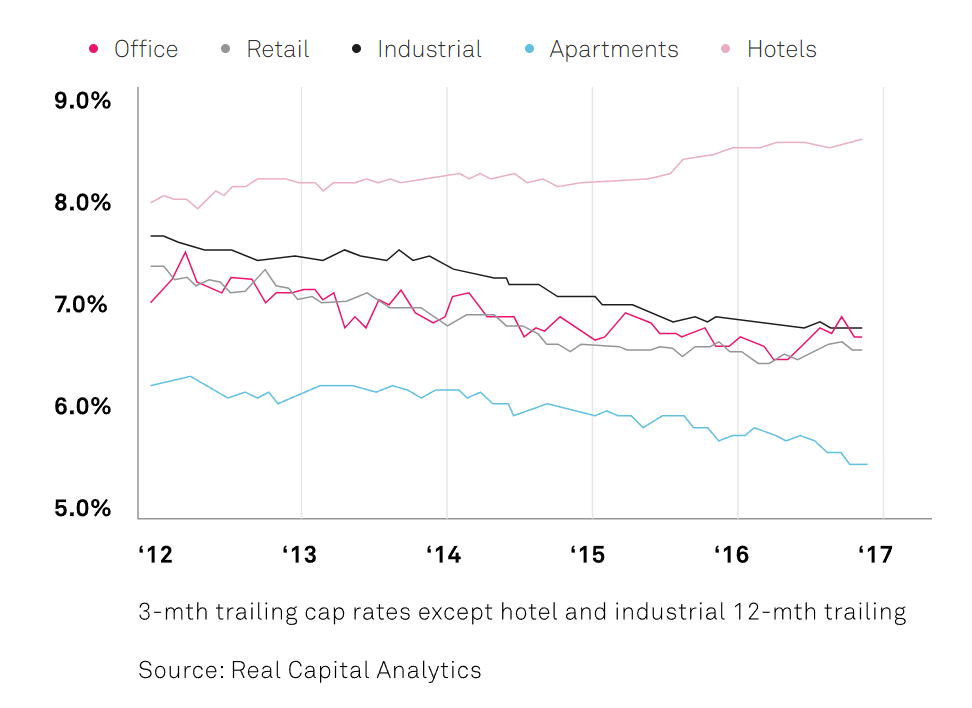
Expectations around cap rates tend to vary depending on the property type (e.g., multifamily, office, retail, hospitality, industrial). Nationally, cap rates on multifamily buildings tend to be lower than office or hospitality. This is especially in the wake of the COVID-19 pandemic. Meanwhile, we are witnessing a compression among industrial cap rates given current market pressures and a lack of available inventory.
对上限率的预期往往因房产类型(例如,多户住宅、办公室、零售、酒店、工业)而异。在全国范围内,多户住宅建筑的上限率往往低于办公或酒店。尤其是在 COVID-19 大流行之后。与此同时,鉴于当前的市场压力和可用库存的缺乏,我们目睹了工业资本化率的压缩。
In summary, the cap rate that is considered “good” for one property type may be very different from the cap rate that is considered “good” for another type of property. It is important to put cap rates in the context of property types when analyzing individual opportunities.
总之,对于一种住宿类型来说,被视为“良好”的上限率可能与对于另一种类型住宿被视为“良好”的上限率有很大不同。在分析单个机会时,将 Cap Rate 置于物业类型的上下文中非常重要。
Property Condition: 物业条件:
Real estate assets are generally classified as Class A, B, or C properties with Class A being the newest, best located and most desirable building type. Class C properties tend to be older, with fewer amenities and may require significant improvements before stabilization. Class B properties fall on the spectrum somewhere in between.
房地产资产通常分为 A、B 或 C 类房产 ,其中 A 类是最新、位置最好和最理想的建筑类型。C 类房产往往较旧,设施较少,可能需要重大改进才能稳定下来。B 类属性介于两者之间。
As it relates to cap rates, Class A properties tend to have the lowest cap rates and may hover between 3-6% depending on the property type. Class B properties will often trade at cap rates between 6-10% and Class C properties will usually sell at cap rates 8% and above.
由于与上限率有关,A 类房产的上限率往往最低,根据房产类型,可能会徘徊在 3-6% 之间。B 类房产的交易价格通常在 6-10% 之间, 而 C 类房产通常以 8% 及以上的上限价格出售。
Market Conditions: 商情:
Market conditions can also influence cap rates. For example, in a low interest rate environment, investors may be willing to pay a premium for individual properties which will drive cap rates down (unless NOI is correspondingly increasing).
市场状况也会影响资本化率。例如,在低利率环境中,投资者可能愿意为单个房产支付溢价,这将降低资本化率(除非 NOI 相应增加)。
How Investors Use Cap Rates
投资者如何使用资本化率
Cap rates can be valuable to investors for several purposes. Here are the most common ways investors use cap rates when conducting property analyses:
CAP 率对投资者来说可能很有价值,有多种目的。以下是投资者在进行房产分析时使用上限率的最常见方式:
Cap rates help investors measure risk.
上限率有助于投资者衡量风险。
Typically, people consider properties with lower cap rates to be lower-risk investments, and properties with higher cap rates to be higher-risk investments. This allows investors to evaluate the risk associated with properties across and within individual markets, across asset types (Class A, B or C), and among different property types (multifamily vs. office, for example).
通常,人们认为上限率较低的房产是低风险投资,而上限率较高的房产是高风险投资。这使投资者能够评估各个市场内、不同资产类型(A、B 或 C 类 )以及不同房产类型(例如多户住宅与办公室)之间的房地产相关风险。
Cap rates can be used to identify pockets of opportunity.
上限率可用于识别机会。
Let’s say cap rates for multifamily assets in a particular geography tend to hover around 7 or 8 percent. An investor with specific knowledge about that market may view these properties as opportunistic deals.
假设特定地区多户型资产的资本化率往往徘徊在 7% 或 8% 左右。对该市场有具体了解的投资者可能会将这些房产视为机会主义交易。
Maybe they know something about the market. Such as a major employer is planning an expansion or a new transit line is coming to the area. These that makes these properties more attractive than they would be otherwise.
也许他们对市场有所了解。例如,主要雇主正在计划扩建或新的公交线路即将到达该地区。这些使这些属性比其他属性更具吸引力。
That’s the beauty of real estate investing, where investors do not operate in a perfectly efficient market. In situations like these, investors might be willing to take on more risk (at least, perceived risk) to achieve a higher return.
这就是房地产投资的美妙之处,投资者不会在一个完全有效的市场中运作。在这种情况下,投资者可能愿意承担更多风险(至少是感知到的风险)以获得更高的回报。
Cap rates can be used to value a property.
上限率可用于对房产进行估值。
Using the inputs to the cap rate calculation, investors can back into a property’s valuation. For example, in a market where cap rates average 5%. A property that generates $500,000 in NOI would be worth approximately $10 million.
使用资本化率计算的输入,投资者可以重新考虑房产的估值。例如,在上限利率平均为 5% 的市场中。产生 500,000 美元 NOI 的房产价值约为 1000 万美元。
This is often referred to as the “direct capitalization” method. It requires investors to have a strong sense of the market cap rate. Which alone is a critical input into the calculation.
这通常被称为 “直接大写” 方法。它要求投资者对市值率有很强的意识。仅此一项就是计算的关键输入。
Similarly, some investors have minimum cap rate thresholds they use when evaluating deals. Meaning an investor might determine they are only willing to pay a certain amount in order to achieve that baseline cap rate.
同样,一些投资者在评估交易时使用的最低资本化率阈值。这意味着投资者可能会确定他们只愿意支付一定金额以达到该基准上限率。
Going-In vs. Exit Cap Rate
进入 vs. 退出上限率
It is important to distinguish between going-in cap rates and exit cap rates.
区分进入上限率和退出上限率非常重要。
Going-in Cap Rate 进入上限率
The going-in cap rate is the cap rate based upon a property’s current net operating income at the time of sale.
入库上限率是根据房产在出售时的当前净营业收入得出的上限率。
Exit Cap Rate 退出上限率
The exit cap rate, meanwhile, reflects the cap rate after property improvements have been made (or not) and the resulting NOI at the time of sale. The exit cap rate may be higher or lower than the going-in cap rate, and is influenced by many factors including the market conditions at the time of both purchase and sale.
同时,退出上限率反映了物业改善(或未改善)后的上限率以及出售时产生的 NOI。退出上限率可能高于或低于初始上限率,并且受许多因素的影响,包括购买和出售时的市场状况。
A word of caution for investors: some sponsors will try to amplify their return projections by assuming that cap rates will go down during the investment hold period. It is important to look at worst-case scenarios as well. In case there are market forces that impact cap rates beyond a sponsor’s control.
对投资者的警告:一些保荐人会试图通过假设资本化率在投资暂停期内会下降来放大他们的回报预测。查看最坏的情况也很重要。如果存在超出发起人控制范围的市场力量影响上限率。
Most investors will want to be sure there is sufficient cash flow to meet return projections without having to factor in increased asset value.
大多数投资者都希望确保有足够的现金流来满足回报预测,而不必考虑资产价值的增加。
Here are a few examples of how changes to the cap rate can impact value.
以下是资本化率变化如何影响价值的几个示例。
Let’s say a sponsor purchases an apartment building for $5 million. The NOI is $250,000 per year. The resulting cap rate ($250,000 / $5 million) is 5%. The sponsor then executes a value-add strategy, including unit renovations and operational improvements.
假设赞助商以 500 万美元的价格购买了一栋公寓楼。NOI 为每年 250,000 美元。最终的上限率 (250000 USD / 500 万美元) 为 5%。然后,申办方执行增值战略,包括单元翻新和运营改进。
Cap Rate remains constant
Cap Rate 保持不变
Two years later, the NOI is now $350,000 per year. Assuming a constant cap rate, 5% at both the time of purchase and sale. The value of the property will have correspondingly increased. Using the NOI of $350,000 per year / 5% cap rate. Two years ago, the sponsor bought the property for $5 million and it is now worth $7 million
两年后,NOI 现在是每年 350,000 美元。假设资本化率不变,购买和出售时均为 5%。该物业的价值将相应增加。使用每年 350,000 美元的 NOI/5% 的封顶率。两年前,发起人以 500 万美元的价格购买了该物业,现在价值 700 万美元
Cap Rate goes down
Cap Rate 下降
Now, let’s assume the cap rate goes down. In a “falling cap rate” environment, it’s not uncommon to see cap rates compress by 50+ basis points year-over-year. Using the same example as above, let’s say the exit cap rate is now 4.5% based on market conditions. With $350,000 in NOI, at a 4.5% cap rate, the same property would be valued at $7.78 million.
现在,我们假设 CAP 率下降。在“资本化率下降”的环境中,资本化率同比压缩 50+ 个基点的情况并不少见。使用与上述相同的示例,假设根据市场条件,退出上限率现在为 4.5%。以 350,000 美元的 NOI,以 4.5% 的上限率计算,同一房产的价值将达到 778 万美元。
Cap rates investment metrics provide a
上限率投资指标提供了一个
useful, quick comparison of investment properties.
有用、快速的投资物业比较。
Cap Rate goes up
Cap Rate 上升
Of course, cap rates don’t always increase. Sometimes, they go up during the hold period. Let’s say the 5% going-in cap rate increases to 6% at the time of sale. This could be because interest rates rose, a major employer left, significant new competition came online—the possibilities are endless. Now investors demand a 6% cap rate for apartment buildings of that same caliber. Instead of the 5% cap rate at which the property was purchased.
当然,上限率并不总是会增加。有时,它们在保留期内上升。假设 5% 的入库资本化率在销售时增加到 6%。这可能是因为利率上升,一家主要雇主离开,重大的新竞争上线——可能性是无穷无尽的。现在投资者要求相同口径的公寓楼的上限税率为 6%。而不是购买房产时的 5% 上限率。
Nothing else with the deal has changed. With $350,000 in NOI divided by a 6% cap rate, the property is now worth $5.83 million. While this represents a slight increase over the $5 million the property was purchased for, it may not represent much of an increase when loan costs, property improvements, and other expenses are factored in.
这笔交易的其他内容都没有改变。以 350,000 美元的 NOI 除以 6% 的上限率,该物业现在价值 583 万美元。虽然这比购买房产时的 500 万美元略有增加,但如果考虑到贷款成本、房产装修和其他费用,它可能并不代表太大的增加。
Investors should be prepared for all scenarios, including cap rates remaining constant, going up, or going down between the purchase and exit. We have been in a falling cap rate market for a long time, but it’s unlikely to last forever.
投资者应为所有情况做好准备,包括资本化率在购买和退出之间保持不变、上升或下降。我们长期以来一直处于资本化率下降的市场中,但它不太可能永远持续下去。
Cap Rate Limitations Cap Rate 限制
While cap rates can be highly useful when doing an initial comparison of investment opportunities, the calculation is also limited. Some of the downsides to using cap rates are as follows:
虽然在对投资机会进行初步比较时,资本化率可能非常有用 ,但计算也是有限的。使用上限利率的一些缺点如下:
Cap rates don’t factor in debt.
上限利率不考虑债务。
Most real estate investors purchase using some sort of leverage. Factoring in the cost of debt will dramatically impact a project’s overall returns, especially in the early years of ownership or in a high-interest rate environment. For example, any loan with an interest rate higher than 4.25% can create negative leverage in deals with a cap rate of 6% or less. This is because, after making mortgage payments, the cash-on-cash returns will effectively be lower than the 6% cap rate.
大多数房地产投资者使用某种杠杆进行购买。将债务成本考虑在内将极大地影响项目的整体回报,尤其是在所有权的早期或高利率环境中。例如,任何利率高于 4.25% 的贷款都可以在上限利率为 6% 或更低的交易中产生负杠杆。这是因为,在支付抵押贷款后,现金回报率实际上将低于 6% 的上限利率。
Cap rates don’t account for capital expenses.
上限率不考虑资本支出。
We mentioned this above but it’s worth elaborating. Any value-add real estate deal, or office and retail deals that require tenant improvements prior to leasing, will often carry a substantial CapEx budget. The NOI simply does not account for these CapEx costs. At smaller properties with lower income, a significant capital expenditure can have an oversized impact on the project’s cap rate.
我们在上面提到了这一点,但值得详细说明。任何增值房地产交易,或需要在租赁前对租户进行改造的办公和零售交易,通常会带来大量的资本支出预算。NOI 根本不考虑这些资本支出成本。在收入较低的小型房产中,大量的资本支出可能会对项目的上限率产生过大的影响。
Cap rates don’t factor in market rent growth.
上限利率不考虑市场租金增长。
Many properties in major metropolitan areas see much lower cap rates than those in smaller cities or in suburban and rural areas. For example, on the surface, a 7.5% cap rate in Cleveland might appear to be a “better” cap rate than a 4.5% cap rate in San Francisco, but this fails to consider the potential for rent growth in San Francisco (likely higher) relative to that in Cleveland (likely lower), which will influence cap rates over the long-term.
大都市地区的许多房产的上限率远低于小城市或郊区和农村地区的房产。例如,从表面上看,克利夫兰 7.5% 的上限率似乎比旧金山的 4.5% 上限率“更好”,但这没有考虑到旧金山租金增长的可能性(可能更高)相对于克利夫兰的租金增长(可能更低),这将影响长期上限率。
In order for a cap rate calculation to be accurate, it assumes the NOI provided by the seller is accurate.
为了准确计算上限率,它假定卖家提供的 NOI 准确无误。
While the NOI provided by the seller can be useful, it is not always highly accurate. Some sellers have more or less sophistication than others in terms of their record-keeping and accounting.
虽然卖家提供的 NOI 可能很有用,但它并不总是非常准确。一些卖家在记录保存和会计方面比其他卖家或多或少复杂。
Moreover, the local government typically raises property taxes when a property gets sold, and this rise must appear in the Net Operating Income (NOI) following the closing. Prospective buyers will want to comb through the NOI provided by the seller and do a gut-check as to whether the numbers seem realistic or not.
此外,当地政府通常会在房产出售时提高房产税,而这一增长必须出现在交易完成后的净营业收入 (NOI) 中。潜在买家将希望梳理卖家提供的 NOI,并对这些数字是否看起来切合实际进行直觉检查。
Cap rates only provide a snapshot in time analysis.
上限率仅提供时间分析的快照。
In practice, NOI will vary from year to year based on many factors, such as vacancy, rent collections and more. The cap rate does not capture these periodic fluctuations. Instead, it provides a simple snapshot in time analysis based on two otherwise simple data points (NOI and purchase price).
在实践中,NOI 会根据许多因素每年变化,例如空置率、租金收取等。上限率并未反映这些周期性波动。相反,它基于两个原本简单的数据点(NOI 和购买价格)提供了简单的时间快照分析。
Conclusion 结论
Undoubtedly, investors widely use cap rates as one of the most important investment metrics. They provide a useful, quick comparison of investment properties. However, for them to be most effective, an investor will want to closely examine what is driving the cap rate for any individual property and whether there is an opportunity to improve the cap rate through strategic investments.
毫无疑问,投资者广泛使用资本化率作为最重要的投资指标之一。它们提供了有用的、快速的投资物业比较。然而,为了使它们最有效,投资者需要仔细研究是什么推动了任何单个房产的上限率,以及是否有机会通过战略投资来提高上限率。
Investors will often turn to metrics like “cap rate” for guidance.
投资者通常会转向“资本化率”等指标作为指导。
Analytical tools like cap rate are intended to provide
Cap Rate 等分析工具旨在提供
a more objective comparison of properties using financial data
使用财务数据对房产进行更客观的比较
FAQ 常见问题
What is a good cap rate on an investment property?
什么是投资物业的良好上限率?
It is stated by several analysts that a “good” cap rate can be anything between 4%-12%. However, the appropriate cap rate for a property depends on various factors such as location, condition, and the investor’s risk tolerance. A high cap rate is usually 10% or above, while a low cap rate is usually 5% or below. It is important to consider current market conditions and compare the cap rate to similar properties in the area to determine if it is a good investment. It is also important to consider the potential for future growth and appreciation of the property.
几位分析师表示,“良好”的资本化率可以是 4%-12% 之间的任何值。但是,房产的适当上限率取决于各种因素,例如位置、状况和投资者的风险承受能力。高资本化率通常为 10% 或以上,而低资本化率通常为 5% 或更低。重要的是要考虑当前的市场状况并将上限率与该地区的类似房产进行比较,以确定它是否是一项好的投资。考虑房产未来增长和升值的潜力也很重要。
Is a higher cap rate always better?
上限率越高总是越好吗?
A higher cap rate generally indicates a higher level of risk, as the investor is demanding a higher return on their investment to compensate for the increased risk.Ultimately, whether a higher cap rate is “good” or “bad” will depend on the investor’s risk tolerance and investment objectives.
较高的上限率通常表明较高的风险水平,因为投资者要求更高的投资回报以补偿增加的风险。归根结底,更高的上限利率是“好”还是“坏”将取决于投资者的风险承受能力和投资目标。
How does cap rate affect property value?
上限率如何影响房产价值?
If the net operating income (NOI) of a property is constant, a higher cap rate will result in a lower property value. This is because a higher cap rate indicates a higher level of risk and a higher expected return on investment, so the value of the property must be lower to meet this expectation. On the other hand, if the cap rate applied to the property is too low, it may result in an overestimate of the property’s value.
如果房产的净营业收入 (NOI) 保持不变,较高的上限率将导致较低的房产价值。这是因为较高的上限率表明较高的风险水平和较高的预期投资回报,因此房产的价值必须较低才能满足这一预期。另一方面,如果适用于房产的上限率过低,则可能会导致房产价值被高估。
What happens to cap rates when interest rates rise?
当利率上升时,上限利率会发生什么变化?
When interest rates rise, it can affect the cap rate of an investment property in several ways. The increased cost of borrowing money to purchase a property may lead buyers to be more selective in their purchasing decisions and pay less for a property, resulting in a higher cap rate. Higher interest rates may also lead to reduced demand for investment properties and lower property values, both of which can contribute to a higher cap rate. In addition, higher interest rates may be seen as a sign of increased economic risk, which can lead to increased risk perceptions for investment properties and a higher cap rate.
当利率上升时,它会以多种方式影响投资物业的上限率。借钱购买房产的成本增加可能会导致买家在购买决定时更加挑剔,并为房产支付更少的费用,从而导致更高的上限利率。更高的利率还可能导致对投资物业的需求减少和房地产价值降低,这两者都可能导致更高的上限利率。此外,更高的利率可能被视为经济风险增加的迹象,这可能导致对投资物业的风险认知增加和更高的上限利率。
What factors affect the cap rate of an investment property?
哪些因素会影响投资物业的上限率?
The cap rate of a property is typically affected by its overall risk level, the growth expectations it holds, and what opportunity for potential revenue it holds
房产的上限率通常受其整体风险水平、其持有的增长预期以及它所拥有的潜在收入机会的影响
Does a buyer want a higher or lower cap rate?
买家想要更高还是更低的上限利率?
While it often depends on the risk tolerance of each buyer. Often times, buyers may strive to look for a higher cap rate. Given that the lower rates will indicate that the property will be more expensive and its income is anticipated to be much lower.
虽然这通常取决于每个买家的风险承受能力。很多时候,买家可能会努力寻找更高的上限利率。鉴于较低的费率将表明该房产将更昂贵,并且预计其收入会低得多。